


Soft washing in cold weather can sound like a hassle, yet it often solves the exact problems winter leaves on siding, roofs, and concrete. Grime does not take a season off, and neither do algae stains, oily film, or road splash. The right approach keeps surfaces clean without turning your property into an ice rink.
Soft Washing in Cold Weather Starts With the Mix
A soft wash leans on cleaning mix and dwell time, not brute force. That detail matters in January, because cold air slows reactions and changes how water moves. Better results still show up when the mix, timing, and rinse plan match the temperature outside.
Bleach-based mixes, surfactants, and light soaps can still work in the cold, just more slowly. Extra dwell time helps, and runoff needs a plan so it does not freeze. A careful technician can get a bright finish without the risks that come with high pressure.
The Real Goal of a Soft Wash
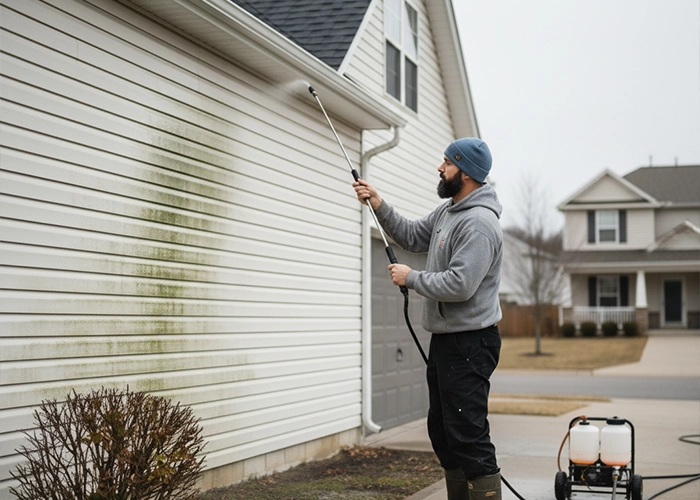 Most exterior stains have a cause, not just a color. Algae and mildew leave dark streaks, exhaust settles into a thin film, and damp shade holds dirt longer. Soft washing targets that layer so the surface can look clean without being carved up.
A lower-pressure rinse also protects paint, mortar joints, and older finishes. That is why many owners choose soft washing for vinyl, stucco, and roof shingles. Less force also lowers the chance of pushing water behind siding where it can later freeze.
Why Winter Buildup Looks Worse
Cold months tend to trap dirt in place. Short days keep shaded walls damp, and that moisture helps stains cling. A driveway can also collect salt haze, tire marks, and gritty runoff from the street.
soft washing in winter makes sense for this reason alone. Spring sunshine can highlight every streak that winter left behind, especially on light-colored siding. A midseason clean keeps the property looking cared for while preventing heavier buildup later.
When Cold Weather Becomes a Deal Breaker
 Freezing temperatures change the whole job. Water left on concrete can turn slick fast, and that slip risk is not worth a rushed clean. The safest plan keeps washing above freezing with enough sun and airflow to dry surfaces.
Wind can also derail a winter job. Overspray travels farther, and cold gusts can dry a wall in odd patches, which leads to streaks. A reschedule is often smarter when the forecast calls for hard freezes, high winds, or a sharp drop near sunset.
A safe winter clean also needs daylight. Late-afternoon rinsing can leave damp spots that freeze overnight. Midday work gives the property time to dry out.
Soft Washing in Cold Weather: Picking the Right Time of Day
The best winter wash rarely starts at sunrise. Midday warmth allows the solution to work and for rinse water to drain and dry. South-facing surfaces often cooperate first, while shaded north walls may need more patience.
Small temperature pockets matter, too. A courtyard can stay colder than the street, and a windy corner can chill a wall even when the air feels mild. A quick surface check helps confirm that the job can finish without ice forming.
Downspouts and low spots deserve a quick look. Water that pools in one place can freeze first. A rinse plan that avoids puddles keeps the area safer.
Mixing and Storing Products Safely
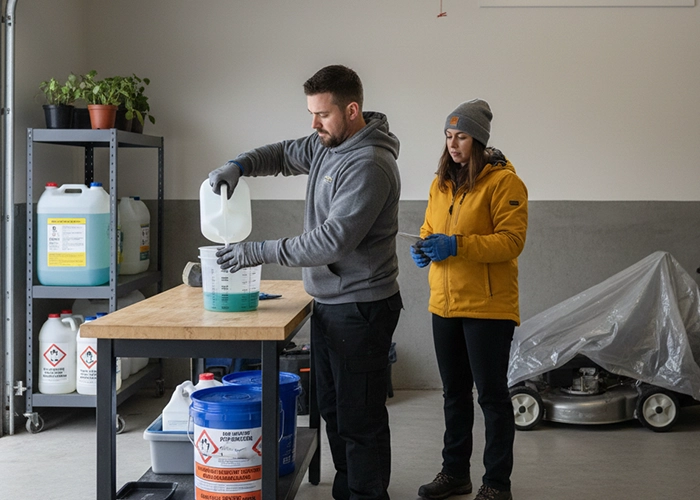 Cold weather invites a tempting mistake: making mixes stronger to compensate for slower cleaning. Stronger does not always mean better, and it can raise the chance of damage on delicate surfaces. A safer path uses the right ratio, allows more dwell time, and keeps the mix from getting too cold.
Storage habits matter as well. Many makers recommend keeping bleach in a cool, dark place to slow breakdown and prevent the container from freezing. Freeze points also shift with strength, and weaker bleach mixes can freeze near the high 20s (°F).
Chemical safety remains a must in any season. Bleach should never be mixed with acids or ammonia-based cleaners because dangerous gases can form. A trained crew also protects plants and metal fixtures by controlling overspray and thoroughly rinsing.
Dwell Time in the Cold
Reaction time stretches out as the temperature drops. The same mix that cleans fast on a mild day may need a longer rest on a 40-degree morning. That extra dwell time is normal, and it is part of the strategy for soft washing in cold weather.
Drying can still happen in winter, especially with wind. A light mist can keep the surface wet so the mix keeps working. Smaller sections help, because the rinse can follow before anything dries in blotches.
The Temperature Check That Keeps Jobs Safe
 Winter success comes down to a simple truth: air temperature is not the whole story. Sun, shade, and surface material all change how fast water freezes. A quick check before spraying can prevent a nasty surprise later.
- Air temperature stays above freezing for the full job window.
- Surface temperature runs warmer in sun, but colder in shade.
- Evening temperatures will not drop fast right after the rinse.
- Wind stays low enough that mist stays controlled.
Soft Washing in Cold Weather: Water Control and Ice Prevention
Runoff management is the main safety issue on winter jobs. Water that streams across walkways can freeze in shade, even when the air is just above 32°F. Smart routing of rinse water keeps entryways, steps, and sidewalks safer.
A simple plan can keep water away from door thresholds. Downspouts can be checked so they do not dump onto walkways. De-icing products may be used on nearby walking surfaces when conditions call for it, following label instructions.
Walkways deserve extra care in winter. A quick rinse can often be followed by a broom sweep to break up puddles. If a spot stays wet, a small amount of ice melt can help once the work wraps up.
Equipment That Hates Freezing
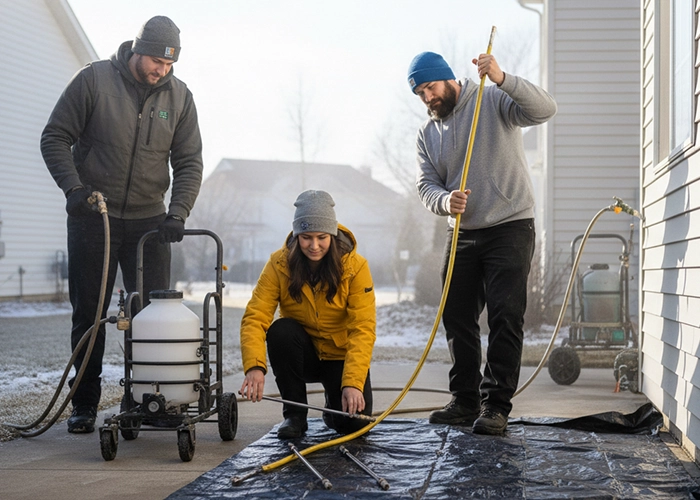 Cold affects tools in quiet ways. Hoses stiffen, o-rings lose flexibility, and pumps can crack if water freezes inside. Winter steps after the job protect the gear and prevent surprise repairs.
pressure washing in cold weather creates extra risk for equipment because higher flow and force leave more water in lines, wands, and pumps. Soft washing usually runs at lower pressure, but the same freezing risk applies when the day ends. Proper draining, pump protection products, and indoor storage reduce that risk.
Hoses and spray guns last longer with good storage. A quick drain, then a warm spot indoors, keeps parts from splitting. The next job starts faster, too, since nothing needs thawing.
Surface Notes That Save a Finish
Different materials react differently to winter conditions. Painted wood can hold water at seams, and that moisture can freeze overnight if the job ends too late. Brick and block can also hide moisture, so gentle rinsing and good drying time matter.
Roofs deserve special care in the cold. Wet shingles can be slick, and a frosty morning can turn a safe slope into a hazard. Ground-based methods often make more sense in winter, along with careful timing.
Ready for a Winter Appointment
Small prep steps make a cold-weather wash smoother. Patio furniture and doormats can be moved away from rinse paths so they do not sit in cold runoff. A clear work area also gives the crew room to place hoses without creating trip points.
Outdoor water access helps as well. A spigot that is easy to reach cuts the time hoses sit still with water inside. Pets and kids should stay inside during the wash, since winter runoff can look harmless and still freeze later.
What Pros Change When Soft Washing in Cold Weather
A winter approach often means working in smaller zones. The crew can apply the solution, watch the reaction, and rinse before the next shaded area cools down. That pacing also keeps runoff in check.
Some tweaks feel minor and still matter a lot. Warm water from an indoor tap can help reduce line freezing during setup. A slightly different surfactant can help the mix cling without needing extra strength.
Setting Expectations Before the Wash
A winter job benefits from a short talk about what will look different. Some stains lighten over time as the mix keeps working after the rinse. A second light treatment may be the better call for heavy growth, rather than forcing a single hard pass.
Clear expectations also protect landscaping. Dormant plants still need rinsing when overspray lands, and soil can stay wet longer in cold weather. A little planning keeps the cleaning focused on the surface, not on the flower bed.
Soft Washing in Cold Weather: The Payoff
Soft washing in cold weather is not just about looks. Cleaner surfaces can cut slip risk from algae film on shaded concrete and can support longer paint life by removing grime that holds moisture. A clean exterior also makes small maintenance issues easier to spot, such as failing caulk or peeling paint.
Winter soft washing can also help with scheduling. Many crews have more open slots between the spring and summer rushes, which can mean faster turnaround. A cleaner exterior going into spring also supports curb appeal for listings, rentals, and HOA common areas.
A steadier schedule can reduce stress for owners and managers. Spring stays open for repairs and landscaping because the wash is already done.
A Clean Winter Win
Soft washing in cold weather works when chemistry, timing, and safety all get equal attention. The season does not have to force a pause on exterior care when temperatures cooperate and the plan controls runoff. A thoughtful winter clean can leave the property ready for the first warm weekend without the spring scramble.
Related Articles:
- How To Soft Wash Roof And Avoid These Roof Cleaning Mistakes
- Roof Algae Removal: Why Soft Washing Protects Shingles and Warranty
- What Is Soft Washing?