
Dark streaks on a roof make a community look tired, even when homes are in good shape. Roof algae removal keeps shingles intact while restoring clean curb appeal. Soft washing does the work at low pressure, so the surface is cleaned without stripping granules or risking your warranty.
Roof Algae Removal vs. Power Washing
Roofs are built to shed water, not to take a high-pressure blast. When a standard pressure washer hits shingles, protective granules can be loosened and washed away. That damage shortens service life and may cause leaks.
Soft washing approaches the problem with care. Low pressure and a targeted cleaning solution break up the algae film, then allow a gentle rinse to carry it off. Because the stream stays soft, the shingle mat is not torn and seal strips are not lifted.
For an HOA, that difference matters. Roof algae removal done with soft washing treats the stain and protects the roof system. The result is a clean roof and fewer headaches with repairs or warranty claims later.
Why Soft Washing Protects Shingles and Warranty
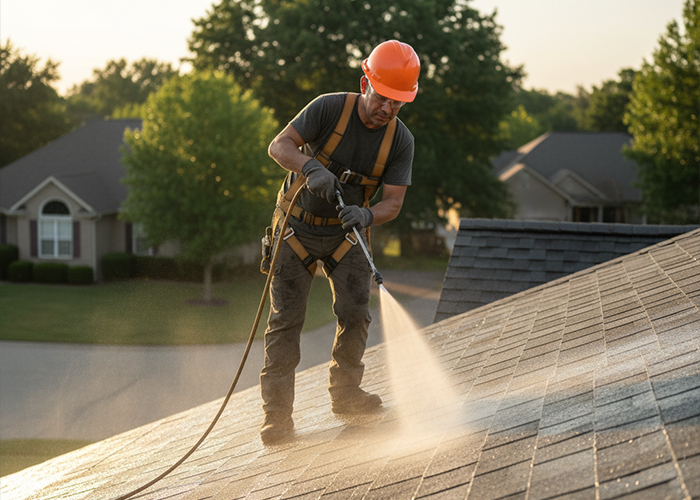 Most shingle makers warn against high pressure on asphalt roofs. They approve cleaning methods that use light application, the right chemistry, and proper rinsing. Following that guidance helps you keep warranty coverage when cleaning is needed.
Soft washing also preserves the mineral granules that guard against sunlight. Those granules are part of the roof’s weather shield. When they remain in place, the roof ages as designed and stays in line with manufacturer expectations.
Documentation is part of protection. A professional contractor notes the process, products, and dwell times used. If a future claim arises, your community can show that cleaning followed accepted practice.
How Algae Grows on Roofs and Why It Spreads
Algae thrive where moisture lingers. North-facing slopes and shaded sections often show stains first. Over time, wind and run-off spread the film across more of the roof.
Granules can hold a bit of dust and pollen. That dust becomes food. When the weather stays warm and humid, growth speeds up and the streaks turn darker.
Left alone, the film holds moisture and heats unevenly in the sun. That extra stress is small at first, yet it can add wear to the roof’s surface. Early action keeps the issue simple.
What a Professional Soft Wash Includes
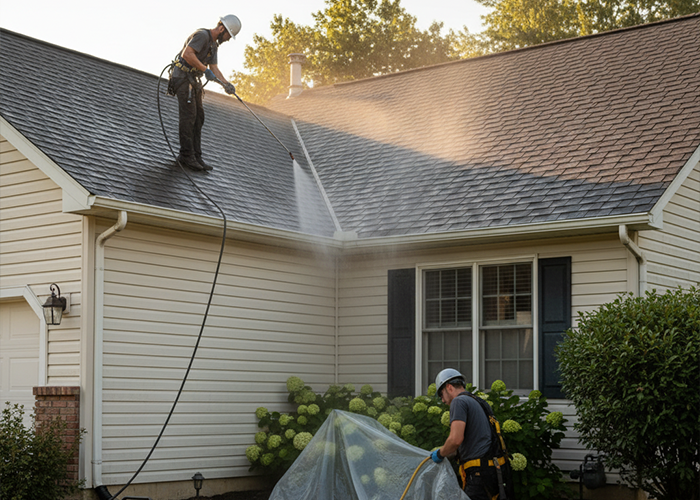 A good service follows a clear sequence that protects homes and landscaping. Crews stage safely, protect the site, and then work in measured steps to ensure even results.
Typical steps include:
- Site prep, with downspouts directed away from beds and a fresh water supply set up for plant care.
- Application of a roof-safe solution at low pressure, with even coverage from ridge to eave.
- Dwell time and a controlled rinse, followed by a light touch-up on any stubborn areas.
Communication matters just as much. Technicians let residents know when to keep pets inside and when to close windows. Driveways and walkways are rinsed before the crew leaves.
Safe Solutions for Asphalt Shingles
The chemistry behind soft washing is simple. A low-strength cleaning solution breaks down the organic film so that it can be rinsed away. Surfactants help the solution cling to the shingle surface, which improves contact without extra pressure.
Plants are protected before any spray touches the roof. Beds get a fresh water soak, and covers may be used where needed. After treatment, a final rinse keeps leaves and soil healthy.
Two rules guide every job. First, do not mix cleaners unless you are trained and the label allows it. Second, never use acids or heavy abrasives on asphalt shingles. Those products can cut into the mat and shorten roof life.
Warranty Fine Print Boards Should Read
 Warranties often exclude damage from improper cleaning or misuse of pressure. They may specify that only low-pressure applications with approved methods are acceptable. A contractor who follows those directions keeps you within warranty terms.
Keep records in your maintenance file. Save the proposal, the product data sheets, and any service photos. A clean paper trail supports future claims and helps the next board understand what was done.
If your community has mixed roof types, check each manufacturer’s guidance. What is safe for asphalt shingles can differ from the care for tile or metal. A brief review now prevents costly redo work later.
When to Schedule Roof Algae Removal
Timing a roof algae removal service can improve results and reduce resident impact. Mild weather is ideal because the solution stays wet long enough to work. Early fall or spring often provides that steady window.
Look for early signs. If you see streaks forming on the north slope or beneath trees, schedule roof algae cleaning before the stain spreads. Acting early shortens dwell time and reduces the total chemical needed.
Association calendars help. Pair roof work with gutter cleaning or annual inspections, so ladders go up once and the whole roof system gets attention.
When to Call Professional Cleaners
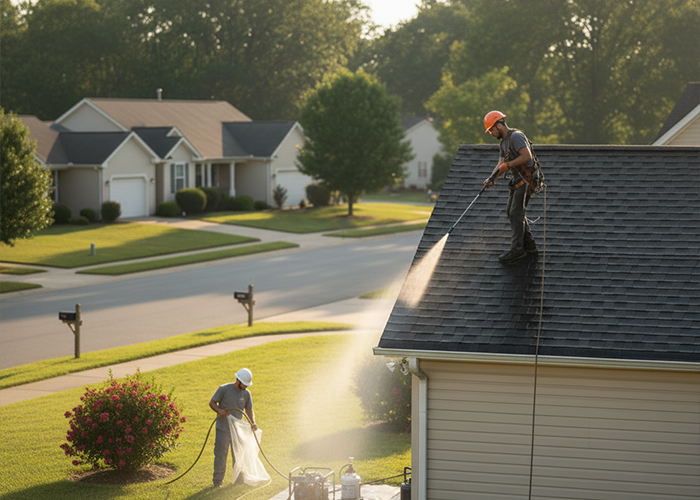 Some situations call for a trained crew. Very steep slopes, multi-story buildings, or roofs with complex valleys need professional staging and safety lines. Those tools keep workers safe and prevent accidental damage to shingles and flashing.
Other red flags include repeated stains in the same location and brittle shingles that shed granules when touched. These deserve a careful, low-pressure approach and a light hand on rinsing.
Even if residents have tried home remedies, it is still possible to resolve the issue. A professional will test the surface first, then adjust the solution and technique to protect the roof.
Setting the Budget
Boards want clear scopes that avoid surprise charges. Start with a map of buildings and roof areas that need attention. Add access notes, parking plans, and any irrigation shutoffs the crew should know about.
A good proposal explains the cleaning method, product type, and safety plan. It should also state how plants and siding are protected, and how runoff is managed. With those details in writing, bids are easy to compare.
Price is influenced by square footage, pitch, height, and how heavy the staining is. Bigger roofs and deeper stains take more time. Clear scopes lead to steady schedules and predictable costs.
DIY or Professional Roof Algae Removal: How Boards Should Decide

Homeowners sometimes ask if they can do the work on a weekend. For a single-story roof with light staining, the task can look simple. In practice, ladder safety, chemical handling, and even spray drift make it a poor fit for volunteers.
A licensed contractor brings training, insurance, and the right equipment. Crews keep pressure low, control the solution, and work from safe footing. The finish is even from ridge to eave, which keeps the roof color consistent.
If your community wants residents to handle small steps, keep it to prevention. Trimming back branches and keeping gutters clear will help roofs stay dry and clean between visits.
Roof Algae Removal Tips to Keep Stains Away
Sunlight and airflow are your friends. Trim back overhanging limbs that keep areas damp. Make sure attic ventilation is working, since balanced intake and exhaust help roofs dry after rain.
Copper or zinc strips near the ridge can limit regrowth. Rain carries trace amounts of metal over the shingles, which interferes with algae growth. A roofer can install these during maintenance or replacement.
Regular inspections round out the plan. A quick look each year catches small streaks before they spread. Pair that with gentle cleaning on a set cycle, and roofs stay bright longer.
Proper Techniques for Longevity
Dark streaks do not have to linger. With roof algae removal carried out by soft washing, shingles keep their protective layer and warranties stay intact. Your community gets a fresher look, and the roof keeps doing its job.
Looking for professional help in keeping your roof clean? Washh offers expert pressure washing services to residential and commercial properties. Call us today at 704-321-8000 or contact us online to receive a free estimate.
Related Articles:
- Why Roof Pressure Washing Is Good For Your Roof
- The Ideal Commercial Property Maintenance Checklist
- Boost Sales With This Restaurant Cleaning Checklist