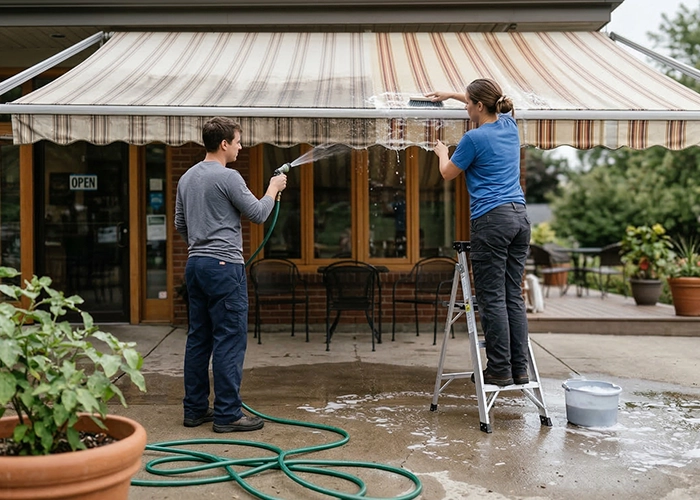
Awnings add shade, comfort, and style to outdoor spaces, but they can quickly collect dirt, mildew, and stains if they are not maintained properly. Regular awning cleaning helps protect the material while keeping your patio, storefront, or deck looking inviting. With the right approach, you can extend the life of your awning and maintain the fresh look of your outdoor area.
Why Awning Cleaning Is Important for Outdoor Spaces
Proper awning cleaning does more than improve appearance. It protects your investment and helps maintain the comfort and value of your property.
Outdoor awnings face constant exposure to dust, pollen, rain, bird droppings, and airborne pollutants. Over time, these elements settle into the fabric or surface and begin to cause staining or discoloration. If ignored, buildup can weaken materials and shorten the lifespan of the awning.
Moisture also plays a major role. When organic debris sits on an awning, it can encourage mold and mildew growth. This is especially common in humid environments or shaded areas where moisture tends to linger.
Clean awnings contribute to a welcoming environment as well. For businesses, a spotless awning creates a positive first impression for customers. At home, it makes patios and decks feel more relaxing and well cared for.
Routine cleaning keeps minor dirt from turning into stubborn stains. In the long run, this simple maintenance step can prevent costly repairs or replacements.
Common Types of Awnings and How They Get Dirty
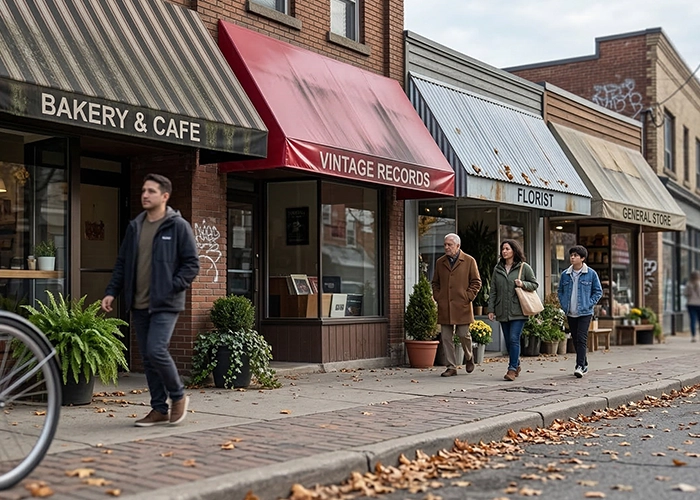 Not all awnings are built the same, and each material collects grime in slightly different ways.
Fabric awnings are among the most common choices for homes and storefronts. They are attractive and versatile, but their woven surfaces can trap dust and moisture easily. Over time, these conditions allow mildew and algae to form, especially in shaded or damp areas.
Vinyl awnings are more resistant to water but can still accumulate dirt and pollution. Dark streaks often appear as airborne contaminants settle on the smooth surface.
Metal awnings, including aluminum designs, are durable and long lasting. However, they still gather debris such as leaves, dust, and bird droppings. When moisture combines with dirt, staining can occur.
Even retractable awnings are not immune to buildup. When they are closed, trapped moisture can lead to mildew formation if cleaning is neglected.
Understanding the material of your awning helps determine the safest cleaning method.
Signs Your Awning Needs Cleaning
Awnings rarely stay spotless for long. Still, many property owners wait until staining becomes obvious before addressing the issue.
Several warning signs indicate it is time for a cleaning.
- Visible Dirt and Stains
Dust, pollen, and pollution create dull patches or streaks on the surface. - Mildew or Dark Spots
Black or green specks often signal mold or algae growth caused by moisture. - Musty Odors
Fabric awnings may develop a damp smell if mildew begins forming. - Water Not Draining Properly
Debris buildup can interfere with the awning’s slope or drainage. - Discoloration Around Edges
Dirt tends to collect where seams and edges meet.
Catching these signs early makes cleaning easier and helps protect the material.
How Often Should You Clean Your Awnings
 Awning cleaning frequency depends on several factors, including location, weather, and surrounding environment.
Residential awnings typically benefit from a thorough cleaning at least once or twice each year. Spring and early fall are ideal times because they remove seasonal buildup and prepare the awning for changing weather.
Properties located near busy roads may require more frequent cleaning. Traffic pollution and airborne dust settle quickly on outdoor surfaces.
Homes surrounded by trees also experience faster debris accumulation. Leaves, sap, and pollen can stain awnings if they remain too long.
For commercial properties, the cleaning schedule may need to be more frequent. Businesses rely on clean storefronts to maintain a professional appearance.
Routine inspections help determine when cleaning is necessary. If stains or mildew begin appearing, it is best to address them right away.
Preparing Your Awning for Cleaning
Before beginning the cleaning process, preparation is essential. This step helps prevent damage while making the job more efficient.
Start by removing loose debris. Leaves, twigs, and dirt should be brushed away using a soft broom or brush. This prevents particles from scratching the surface during washing.
Next, inspect the awning for damage. Look for small tears, loose stitching, or worn hardware. Cleaning a damaged awning may worsen the problem, so repairs should be handled first.
Protect nearby furniture and landscaping as well. Cleaning solutions and runoff can affect plants or outdoor décor.
It is also helpful to test cleaning products on a small area before applying them across the entire awning. This ensures the solution will not discolor or damage the material.
Step-by-Step Awning Cleaning Process
 Cleaning an awning does not have to be complicated. When done carefully, the process can restore its appearance without harming the material.
- Rinse the Surface
Begin by lightly rinsing the awning with water. A garden hose works well for most materials and helps loosen dirt. - Apply a Mild Cleaning Solution
A mixture of warm water and gentle soap is often enough for routine cleaning. Spread the solution using a soft brush or sponge. - Scrub Gently
Work in small sections while scrubbing lightly. Avoid aggressive brushing, which can damage fabrics or coatings. - Let the Solution Sit Briefly
Allow the soap to remain on the surface for several minutes so it can break down grime. - Rinse Thoroughly
Remove all soap residue with clean water. Leftover detergent may attract dirt later. - Allow the Awning to Dry Completely
Keep the awning extended until it dries fully. This prevents moisture from becoming trapped in the fabric.
Patience during the process often produces the best results.
Pressure Washing vs. Soft Washing for Awnings
Many people assume pressure washing is the best solution for every exterior surface. In reality, awnings often require a gentler approach.
High pressure can damage delicate materials, especially fabric awnings. Strong streams of water may stretch fibers, loosen stitching, or remove protective coatings.
Soft washing is usually safer. This method uses low-pressure water combined with specialized cleaning solutions. The solution breaks down dirt, mold, and algae without stressing the material.
Professional cleaning companies often rely on soft washing techniques for awnings. The method cleans effectively while protecting the surface.
Pressure washing may still be used for durable metal awnings, but it should always be handled with care.
Choosing the right technique ensures the awning stays clean without causing unnecessary wear.
Preventing Mold, Mildew, and Stains
 Regular cleaning helps prevent most awning problems, but a few additional habits can make maintenance easier.
Keeping the awning dry is one of the most important steps. After rain, allow the awning to remain open long enough for moisture to evaporate.
Trimming nearby trees can also reduce debris accumulation. Leaves and branches often trap moisture against the awning surface.
Periodic rinsing with water helps remove dust before it settles deeply into the material. Even a quick spray can make a noticeable difference over time.
Another helpful step involves applying protective treatments designed for awning fabrics. These products can add water resistance and help prevent staining.
Consistent care keeps the awning looking newer for longer.
When to Hire a Professional Awning Cleaning Service
Some cleaning jobs are simple enough for homeowners to handle. However, there are times when professional help becomes the better option.
Large awnings or those installed on multi-story buildings can be difficult to reach safely. Professionals have the equipment needed to clean these areas without risk.
Severe staining or heavy mildew growth may also require specialized solutions. Professional cleaners know how to treat these problems without damaging the material.
Another advantage is efficiency. Experienced technicians can clean awnings thoroughly in less time while delivering consistent results.
Businesses often rely on professional cleaning services to maintain their appearance. Clean storefronts attract customers and create a positive impression.
Professional cleaning can also extend the life of the awning, which saves money in the long run.
Seasonal Awning Maintenance Tips
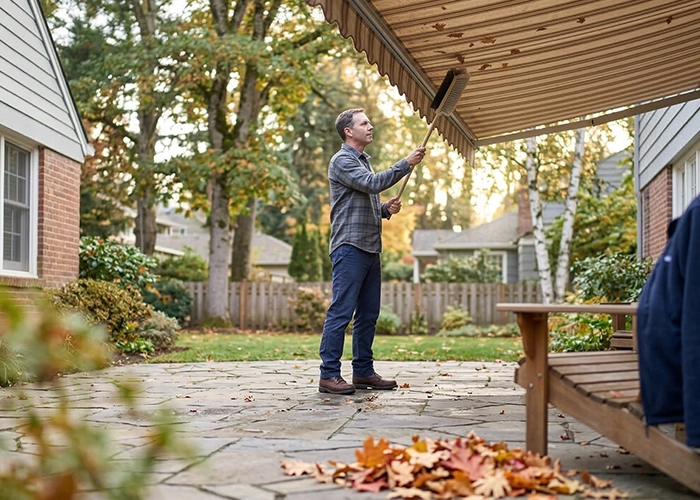 Awnings benefit from a few simple seasonal maintenance habits. These small tasks help prevent larger problems later.
Spring is an ideal time for a full inspection and cleaning. Winter weather often leaves behind dirt and debris.
During summer, occasional rinsing helps remove dust and pollen that accumulate during dry weather.
Fall maintenance usually focuses on clearing leaves and organic debris. This step reduces moisture buildup before colder months arrive.
In winter, retractable awnings should remain closed during heavy storms or snow. This protects the structure from excess weight and potential damage.
Maintaining a seasonal routine keeps awnings in better condition throughout the year.
Keeping Your Awning Looking Its Best
Regular awning cleaning keeps outdoor spaces attractive while protecting the materials from damage. With proper care, awnings can continue providing shade and style for many years. A consistent maintenance routine and professional help when needed make all the difference.
Are you looking for professional advice? Contact WASHH today to schedule expert exterior cleaning and keep your property looking its best all year long.
Related Articles