
Awnings help protect outdoor areas from sun and rain while improving the overall appearance of a property. Over time, however, dirt, mildew, and stains can build up, making awning cleaning an important part of exterior maintenance. Property owners often wonder whether they should clean awnings themselves or hire professionals to handle the job.
Awning Cleaning Basics Every Property Owner Should Know
Before deciding between DIY and professional awning cleaning, it helps to understand what the process actually involves.
Outdoor awnings are exposed to constant environmental elements. Dust, pollen, bird droppings, pollution, and moisture collect on the surface every day. If the buildup sits too long, stains and mildew may begin to form.
Different awning materials also require different cleaning methods. Fabric, vinyl, and metal surfaces react differently to cleaning solutions and water pressure. Using the wrong technique can damage the material or shorten the awning’s lifespan.
Routine cleaning prevents minor grime from turning into stubborn stains. Whether the job is done by the property owner or a professional service, consistent maintenance keeps awnings looking clean and welcoming.
Why Awnings Need Regular Cleaning
 Awnings serve both a functional and visual role on a property. When they are clean, they provide shade and enhance curb appeal. When they are dirty, the entire building can appear neglected.
Organic debris such as leaves and pollen traps moisture against the awning surface. This moisture creates an environment where mold and mildew can grow. Once mildew spreads, it becomes more difficult to remove.
Pollution and airborne contaminants can also create dark streaks across the surface. These stains are common in urban or high traffic areas where dust and exhaust particles settle on outdoor structures.
Regular cleaning prevents long term damage. It also extends the life of the awning fabric and keeps outdoor spaces looking inviting.
Understanding DIY Awning Cleaning
Many property owners attempt awning cleaning on their own. With the right tools and techniques, basic cleaning can be manageable for smaller awnings.
DIY cleaning usually involves a garden hose, a soft brush, and a mild cleaning solution. These tools allow homeowners to remove loose debris and light stains.
Still, the process requires patience and careful handling. Scrubbing too hard can weaken fabrics or remove protective coatings.
Access can also be a challenge. Awnings installed above patios or storefronts may require ladders or extended tools. Safety should always be considered before starting any cleaning project.
For some homeowners, DIY cleaning offers a simple way to maintain their property between professional services.
Advantages of DIY Awning Cleaning
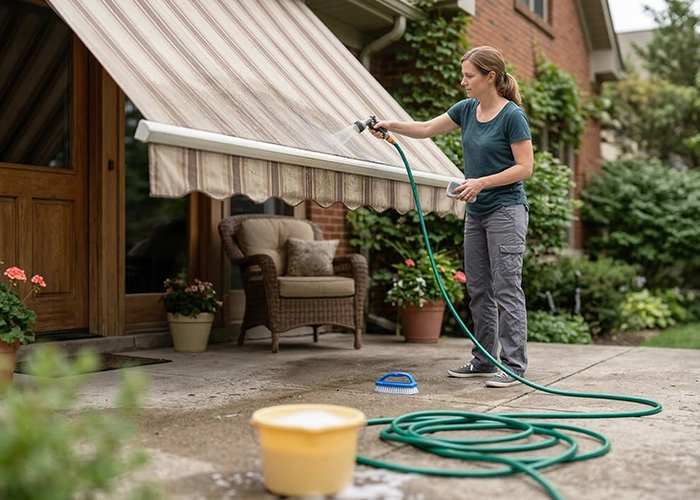 Cleaning an awning yourself may seem appealing for several reasons.
First, DIY cleaning can reduce short term costs. Many of the basic supplies are already available at home, such as soap, brushes, and garden hoses.
Second, property owners can schedule the work whenever it fits their routine. There is no need to coordinate appointments or service calls.
Third, light maintenance tasks become easier when handled regularly. A quick rinse every few weeks may prevent heavy buildup from forming.
DIY cleaning may work well for:
- Small residential awnings
- Light dirt or dust buildup
- Quick seasonal maintenance
These situations usually involve less risk and simpler cleaning methods.
Limitations of Cleaning Awnings Yourself
Although DIY cleaning can be helpful, it also has limitations.
Stubborn stains often require stronger cleaning solutions. Without proper knowledge, certain products may damage the awning material or cause fading.
High areas also pose safety concerns. Reaching large awnings on second story buildings can be risky without proper equipment.
Another challenge involves mildew removal. Mold spores can settle deep into fabric fibers, making them difficult to remove with household cleaners.
In some cases, improper cleaning may even worsen the problem. For example, high pressure water can stretch or tear fabric awnings.
Because of these factors, many property owners eventually choose professional cleaning services.
What Professional Awning Cleaning Services Offer
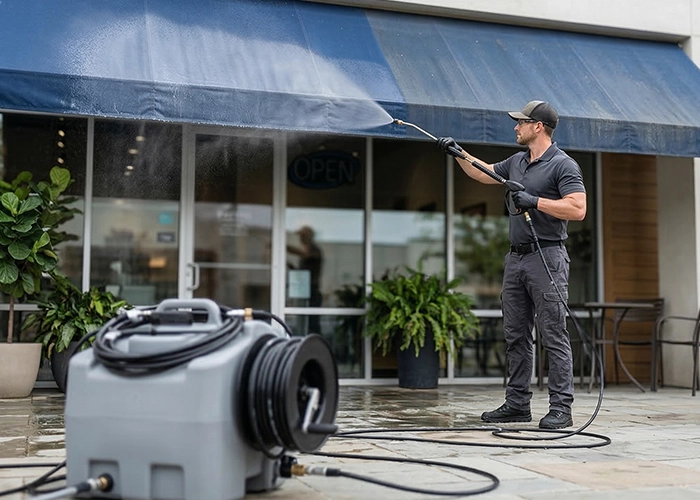 Professional exterior cleaning companies specialize in maintaining outdoor surfaces. Their equipment and experience allow them to clean awnings safely and effectively.
Most professional services use a process called soft washing. This method combines low pressure water with specialized cleaning solutions designed to break down dirt, algae, and mildew.
Soft washing is gentle enough for delicate fabrics while still providing deep cleaning results. The cleaning solution handles much of the work, which reduces the need for aggressive scrubbing.
Professional cleaners also understand how different awning materials react to moisture and detergents. This knowledge helps prevent damage during the cleaning process.
For many property owners, professional services provide both convenience and peace of mind.
Benefits of Hiring Professional Awning Cleaners
Professional awning cleaning offers several advantages that go beyond simple convenience.
- Better Cleaning Results
Professionals use commercial grade cleaning solutions designed to remove stubborn stains and organic growth. - Safer Cleaning Methods
Technicians understand which materials require soft washing and which can tolerate higher pressure. - Improved Safety
Experienced cleaners have the equipment needed to reach elevated awnings safely. - Time Savings
A professional team can complete the job much faster than most homeowners. - Longer Awning Lifespan
Proper cleaning techniques help preserve fabrics, seams, and coatings.
These benefits often make professional cleaning a worthwhile investment for larger or heavily soiled awnings.
Comparing DIY and Professional Awning Cleaning
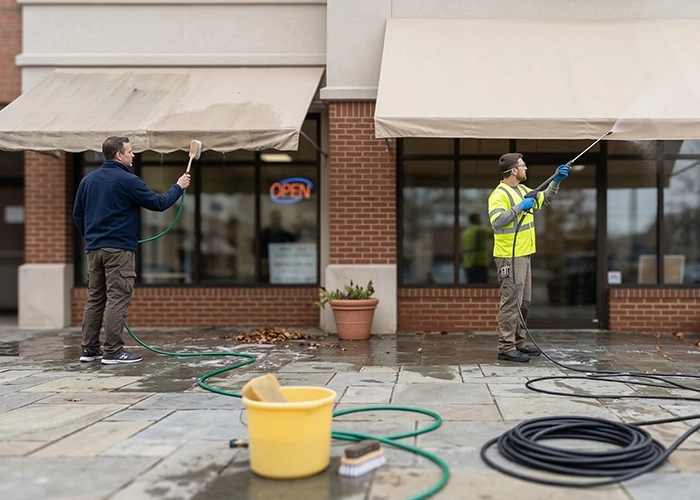 Choosing between DIY and professional awning cleaning depends on several factors. The size of the awning, the severity of stains, and the property layout all play a role.
Below is a general comparison of both approaches.
DIY Awning Cleaning
- Lower upfront cost
- Suitable for small jobs
- Requires time and effort
- Limited tools and cleaning solutions
Professional Awning Cleaning
- Higher initial cost
- More effective stain removal
- Safer for difficult to reach areas
- Uses specialized equipment
Property owners should evaluate the condition of their awnings before deciding which option makes sense.
Situations Where DIY Cleaning Works Well
DIY awning cleaning can work well when the job is relatively simple.
For example, small residential awnings often collect light dust and pollen. A gentle rinse and mild soap solution may be enough to restore their appearance.
Routine seasonal cleaning also fits well into DIY maintenance. Removing debris before it accumulates can prevent more serious staining.
Homeowners who feel comfortable using ladders and cleaning tools may find this approach convenient for regular upkeep.
However, even routine maintenance should be performed carefully to avoid damaging the material.
When Professional Cleaning Is the Better Option
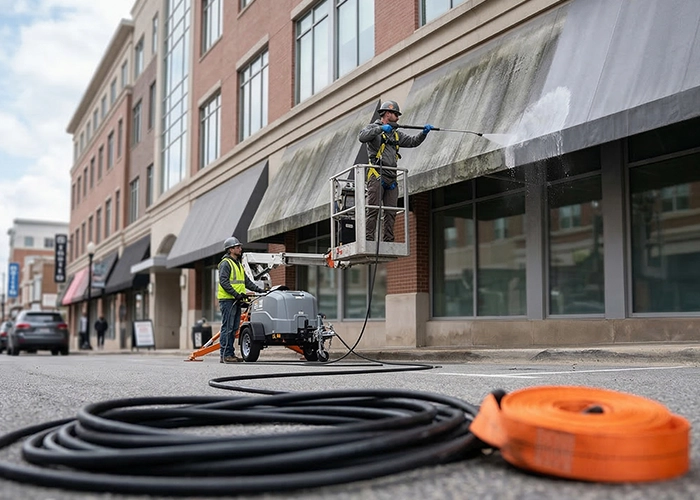 Some awning cleaning situations clearly benefit from professional services.
Large commercial awnings often require specialized equipment to reach safely. Businesses may also want consistent cleaning results to maintain a professional appearance.
Heavy mildew growth is another situation where professional help can make a difference. Professional cleaning solutions break down organic stains more effectively than household cleaners.
Multi story buildings also increase the complexity of the job. Professional technicians have safety equipment and training that reduce the risk of accidents.
When stains are severe or access is difficult, professional cleaning usually provides the best results.
Tips for Maintaining Clean Awnings Between Cleanings
Even when professional services are used, routine care helps maintain the appearance of awnings.
Several simple habits can make a noticeable difference.
- Rinse the awning occasionally to remove dust and pollen buildup.
- Keep nearby trees trimmed so leaves and branches do not collect on the surface.
- Allow awnings to dry fully after rain to prevent mildew growth.
- Inspect the awning regularly for stains or debris.
Small maintenance steps like these help reduce the need for deep cleaning later.
How Clean Awnings Improve Property Appearance
Clean awnings can transform the look of an outdoor space. For businesses, they create a welcoming entrance that encourages customers to walk inside.
Residential properties benefit as well. A spotless awning can make patios, decks, and windows look brighter and more inviting.
Exterior cleanliness also contributes to overall property value. Well maintained outdoor features signal that the property is cared for.
Because awnings are visible from a distance, their condition has a strong impact on curb appeal.
Give Your Awnings the Care They Deserve
Your awnings play a big role in the appearance of your property. If stains, mildew, or dirt have started to build up, professional cleaning can restore their fresh look quickly and safely.
Want to keep your property clean without the hassle? Washh offers trusted residential and commercial pressure washing services. Call 704.321.8000 or contact us online to schedule your free estimate today.
Related Articles