
A single slick spot on a sidewalk can turn into an HOA liability issue fast. Residents expect safe walkways, and insurers want proof that hazards were addressed. Professional cleaning removes the grime and growth that make surfaces unsafe, and it does so without harming the property.
How Pressure Washing Reduces HOA Liability
Clean surfaces help cut HOA liability by reducing preventable slips and trips. When walkways are free of buildup, traction improves and small defects are easier to spot. Clear records of service also show that the board took reasonable care.
Pros bring the right pressure, temperature, and detergents for each surface. That matters because too little power leaves residue while too much can etch concrete or lift coatings. The correct technique protects both people and the materials underfoot.
7 Trip Hazards to Prevent HOA Liability
Here are some of the dangers that you can prevent by calling in the professionals.
Algae Film on Shaded Sidewalks and Stairs
 Shade, irrigation overspray, and morning dew invite algae. Left alone, it forms a thin film that looks harmless but behaves like soap on tile. Foot traffic spreads it across steps and landings, which raises the chance of a fall.
A trained technician uses a surface cleaner to lift the film evenly. They often pair low pressure with the right cleaner so the roots of the growth are removed. After rinsing, the natural texture of the concrete is restored and traction improves.
Boards sometimes try to hose these areas. That tends to smear the film rather than remove it. A targeted clean reduces HOA liability and keeps the area safe through the next wet stretch.
Moss Buildup in Paver Joints that Lifts Edges
Moss thrives in damp joints between bricks and pavers. As it swells, edges begin to lift and catch toes, especially near curves or borders. Trips often happen here because eyes are focused ahead, not on the subtle ridge underfoot.
Professionals flush the joints with controlled water flow to remove organic material. They then apply joint sand or polymeric sand to lock the system back into place. This keeps the surface level, slows regrowth, and lowers HOA liability through rainy seasons.
Timing counts. Service done right after leaf drop or a long wet spell prevents the moss from taking hold again.
Biofilm on Pool Decks and Entry Ramps
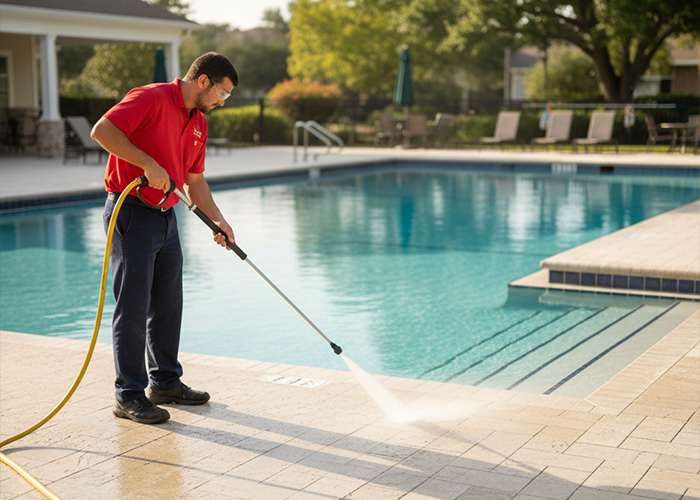 Pool areas collect sunscreen residue, body oils, mildew, and dust. Together they create a slick biofilm that mops cannot break down. Entry ramps see a similar mix from shoes, carts, and humidity.
The fix is a warm water, low-pressure wash with a pool-safe surfactant. This removes the film without chewing up sealers or damaging textured coatings. Clean decks meet expectations for slip resistance and show a pattern of care in case of a claim.
Boards should set a seasonal cadence during peak months. Short, regular visits cost less than emergency calls after a fall.
Oil and Grease Around Parking Pads and Dumpster Areas
Parking stalls and loading spots often show dark drips from engines and hydraulics. When it rains, that residue spreads into a slick film. Pedestrians then track it onto sidewalks, which turns a minor nuisance into an HOA liability problem.
Water alone is not enough. Professionals apply degreasers that break chemical bonds, then use hot water to lift residue while protecting the surface. Many contractors recover and dispose of wastewater so the job meets local rules.
Fresh spots keep appearing in active areas. A quick-response maintenance plan keeps the film from building up and becoming a safety issue.
Leaf Litter and Silt that Hide Hazards at Drains
 Leaves break down into a slippery paste that masks surface changes. Silt behaves like tiny ball bearings under shoes, especially near trench drains and low spots. Hidden lips and cracks surprise even careful walkers.
Routine professional cleaning removes the film and exposes real conditions. If a lip remains after washing, the board can escalate to repair instead of guessing. That sequence saves budget and documents diligence for HOA liability reviews.
Chewing Gum, Tape Residue, and Sticky Blobs that Catch Toes
Gum and event tape collect grit and form raised nubs. These nubs snag shoe soles on landings, at mail kiosks, and near entries. They also hold water, which makes the spot even slicker.
Hot-water gum tools and safe adhesive removers clear these without scarring the surface. A final rinse blends texture so every step feels consistent. Small items like this matter because most trips start with a tiny edge or bump.
Bird Droppings and Mold on Stairs and Rail Bases
 Perched birds leave droppings on steps and at rail bases. Add light rain, and those patches turn slippery, especially on painted metal or sealed concrete. People often hold the rail and look outward, so the hazard is easy to miss.
Technicians use targeted detergents that loosen organic soils and sanitize. Low pressure protects finishes while removing buildup. Clean stairs signal care and reduce HOA liability in high-traffic vertical spaces.
Why Professional Help Beats DIY for Preventing HOA Liability
A pro decides when to pressure wash and when to soft wash. Soft washing uses lower pressure with specialized detergents to remove biological growth on delicate surfaces. The right choice protects coatings, sealers, and nearby landscaping, and it keeps warranties intact.
There is also the question of where the water goes. Reputable contractors capture or direct wastewater where required so detergents do not enter storm drains. That keeps the association compliant and protects streams and ponds.
Finally, vendors document their work. Photos, methods, dates, and materials become part of your maintenance record. Those records help reduce HOA liability questions and support claims handling if an incident occurs.
How Boards Can Minimize HOA Liability
 Every community is different, but a light, repeatable plan works well. Start with a quick site walk. Focus on shaded sidewalks, pool decks, entries, dumpster pads, and the slope leading to drains.
Consider this basic cadence:
- Quarterly cleaning for shaded walkways, pool decks, and ramps during wet seasons.
- Semi-annual service for parking zones, dumpster pads, and mail kiosk paths.
- Spot-response visits after large storms, leaf drop, or community events.
Keep communication simple. Post service dates, note areas treated, and remind residents to report slick spots. Short messages get read and help teams catch hazards early.
Vendor Selection Tips
Insurance matters. Ask for proof of general liability, workers’ compensation, and auto coverage, and keep copies on file. Confirm that the policy limits align with your governing documents and master policy.
Training matters as well. Contractors should explain their methods for concrete, pavers, coatings, and wood. They should also describe detergents in plain terms and provide safety data when asked.
Ask about water control and cleanup. Responsible wastewater handling prevents stains on adjacent areas and avoids storm drain violations. A tidy site lowers complaints and reflects well on the board.
Comprehensive and Accurate Documentation
 Good records are simple and specific. Capture before-and-after photos of high-risk spots like steps, ramps, and shaded curves. Note the weather, the products used, and any remaining defects that need repair.
Store documents in one folder with dates in the file names. If someone asks what you did and when, you can answer in minutes. Clear proof of care reduces HOA liability pressure and builds trust with residents.
Proper Budget Planning
Cleaning is cheaper than what most people expect. It also prevents bigger repairs by keeping growth out of joints and residue off coatings. That saves money on replacement and reduces time spent on complaints.
Work with your vendor to map the highest-risk zones and price them first. Then phase in lower-risk areas as the budget allows. This keeps progress steady while protecting the bottom line.
Preventing HOA Liability Risks
Trip and slip hotspots do not fix themselves. Clean, textured surfaces protect people and property while easing HOA liability concerns. With the right vendor and a simple plan, your community stays safer all year.
Need professional help with community upkeep? Washh offers expert pressure washing services to residential and commercial properties. Call us today at 704-321-8000 or contact us online to receive a free estimate.
Related Articles: