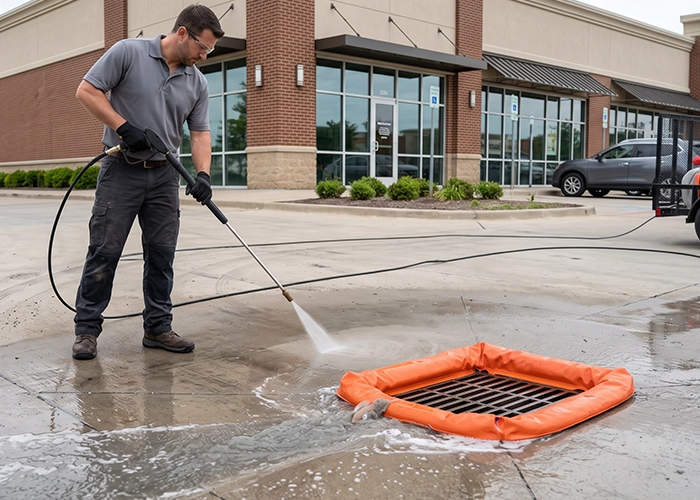
Pressure washing may seem straightforward, but the wastewater it creates can carry oil, dirt, paint, chemicals, and other pollutants.
Understanding EPA Pressure Washing Rules
There is no single federal rule that covers every pressure washing job in the country. Instead, pressure washing wastewater may fall under the Clean Water Act, the National Pollutant Discharge Elimination System, and other federal, state, and local requirements.
The main concern is not the pressure washer itself. Regulators care about what the water picks up, where that wastewater travels, and how it is collected or disposed of after cleaning.
Even plain water can carry pollutants once it touches a dirty surface. Runoff from a parking lot, dumpster pad, loading dock, or building exterior may contain oil, grease, sediment, cleaning agents, paint particles, metals, and organic waste.
Why Pressure Washing Runoff Can Be a Problem
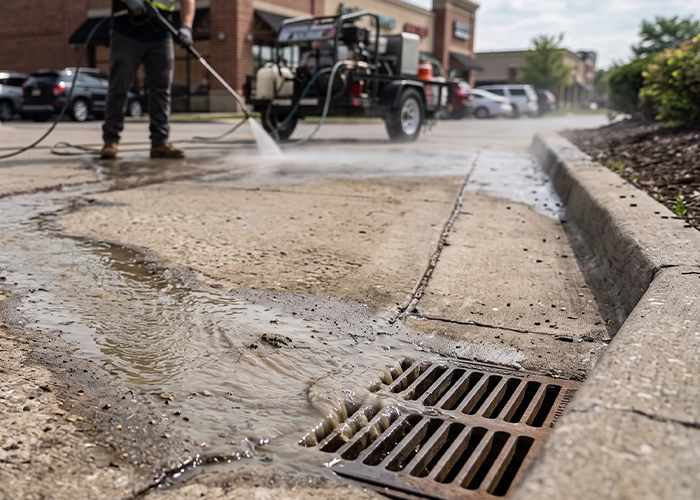 Water flowing into a storm drain often travels directly to a nearby stream, river, lake, wetland, or coastal area. In many systems, stormwater receives little or no treatment before it reaches the environment.
That makes pressure washing runoff different from water that enters an approved sanitary sewer. Sanitary wastewater usually travels to a treatment facility, although the local utility may still restrict what can be discharged.
Runoff can cause several environmental problems:
- Oil and grease can harm fish and other aquatic life.
- Soap may reduce oxygen levels or affect water chemistry.
- Sediment can cloud water and damage aquatic habitats.
- Paint chips may contain lead or other harmful substances.
- Food residue can attract pests and feed unwanted algae.
- Metals and chemicals may remain in the environment for years.
A cleaning job does not need to produce a large flood to cause concern. A small but concentrated discharge can still carry enough waste to violate a local stormwater code.
The Clean Water Act and Pressure Washing
The Clean Water Act is the main federal law used to control water pollution in the United States. Under the law, discharging pollutants from a point source into waters of the United States generally requires authorization under a National Pollutant Discharge Elimination System permit.
A hose, pipe, ditch, or similar path may qualify as a point source in certain situations. Pressure washing runoff that reaches protected water through a direct discharge may therefore raise Clean Water Act concerns.
However, each job must be considered based on its location, the pollutants involved, and the route taken by the wastewater. State environmental agencies often run their own approved NPDES programs and may apply additional requirements.
Local governments also manage municipal separate storm sewer systems, commonly called MS4s. These programs often prohibit non-stormwater discharges into streets, gutters, drains, and catch basins.
Can Pressure Washing Water Enter a Storm Drain?
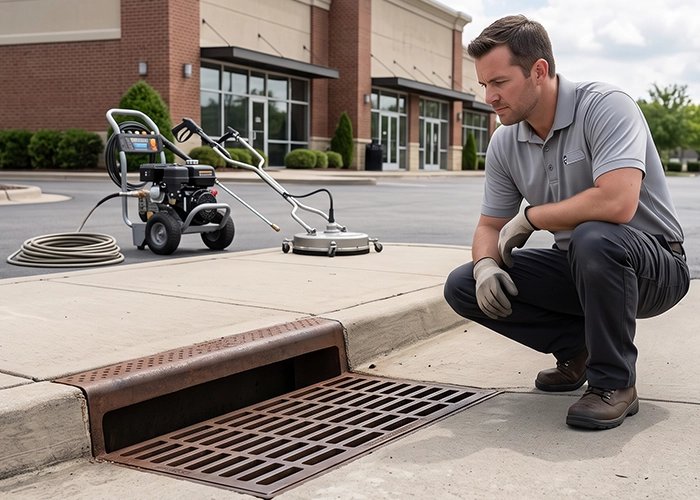 In most cases, contractors should not allow contaminated pressure washing water to enter a storm drain. Many local codes treat wash water as an illicit discharge because it is not made up entirely of stormwater.
A drain marked “drains to river” or “no dumping” is an obvious warning. Still, an unmarked drain should never be treated as a safe disposal point. The property owner or contractor should confirm where the drain leads before work begins.
Landscape areas are not automatic disposal sites either. Water placed on soil can run off, soak into groundwater, harm plants, or carry pollutants to nearby drains. Local rules may permit limited discharge of relatively clean water to a landscaped area, but approval should not be assumed.
Does Biodegradable Soap Make Runoff Legal?
Biodegradable soap can reduce some environmental concerns, but it does not make an improper discharge legal. The wastewater may still contain pollutants removed from the surface.
For example, a contractor may use an environmentally preferable cleaner on an oily parking space. Although the soap may break down over time, the wastewater can still carry petroleum residue, dirt, tire particles, and metals.
Labels such as “green,” “natural,” or “non-toxic” should not replace proper wastewater controls. Contractors must follow product labels, safety instructions, and local discharge rules.
When Wastewater May Enter a Sanitary Sewer
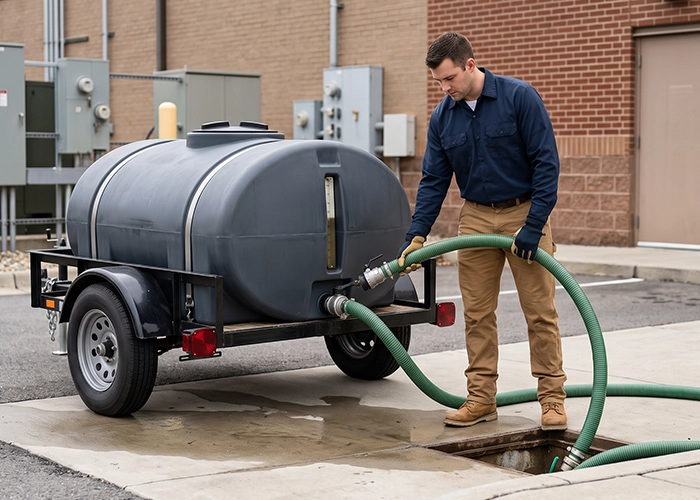 Some communities allow certain pressure washing wastewater to enter a sanitary sewer with prior approval. That does not mean a contractor can open a cleanout or pour collected water into a sink without asking.
The local wastewater utility may set limits for:
- The amount of wastewater being discharged
- Its pH, temperature, and chemical content
- Oil, grease, solids, and metal concentrations
- The type of cleaning product used
- The time and location of the discharge
- Pretreatment or filtration requirements
A utility may refuse the discharge if it could damage pipes, affect treatment operations, or pass through the facility untreated. Written approval offers better protection than relying on an informal assumption.
Septic systems also need special care. Pressure washing wastewater can overload a system or introduce chemicals that disturb its normal treatment process. The septic system owner and local health authority should be consulted before disposal is considered.
How Professionals Control Pressure Washing Wastewater
A responsible contractor plans for wastewater before starting the equipment. This is especially important at commercial properties, where large paved areas can send runoff toward several drains.
Common control methods include:
- Inspecting the Work AreaThe contractor identifies nearby storm drains, slopes, cracks, landscaped areas, and possible discharge paths. The surface is also checked for oil, paint, chemicals, animal waste, and other contaminants.
- Dry Cleaning FirstLeaves, loose dirt, trash, absorbent material, and debris can be swept or vacuumed before washing. This reduces the amount of waste that must be removed from the water later.
- Protecting Storm DrainsDrain covers, berms, mats, sand tubes, or temporary barriers can be used to keep runoff away from the storm system. These controls must be monitored throughout the job because water may move around them.
- Collecting the Wash WaterWet vacuums, recovery units, pumps, or vacuum surface cleaners can capture wastewater. The equipment selected should match the size and layout of the site.
- Filtering or Treating the WaterScreens and filters can remove solids, while specialized systems may separate oil or adjust other wastewater conditions. Treatment alone does not grant permission to discharge the water.
- Using an Approved Disposal MethodCollected water may be taken off-site, sent to an approved sanitary connection, or managed through another authorized method. The proper option depends on its contents and local requirements.
When Pressure Washing Waste May Be Hazardous
 Some jobs create wastewater or debris that needs more careful handling. This can happen when pressure washing removes lead-based paint, chemical residue, heavy metals, solvents, or waste from an industrial process.
Federal hazardous waste rules under the Resource Conservation and Recovery Act may apply if the collected material is classified as hazardous waste. State requirements may be broader than the federal rules.
Contractors should not mix questionable waste with ordinary wash water simply to dilute it. Dilution does not remove the hazard and may make safe disposal more difficult.
Testing may be needed when the contents are unknown. Work involving old coatings, industrial equipment, fuel areas, or chemical storage zones should be reviewed before cleaning begins.
Special Concerns for Commercial Properties
Commercial properties often have more pollution sources than homes. Parking garages, gas stations, restaurants, warehouses, shopping centers, and industrial sites each present different risks.
A restaurant dumpster pad may contain grease and food waste. A parking garage can hold motor oil, coolant, brake dust, and tire residue. An industrial loading area may contain materials linked to the facility’s operations.
Property managers should tell the pressure washing company about known spills, coatings, chemicals, and drainage features. Hidden conditions can change the equipment, labor, and disposal method required for the job.
Regular cleaning contracts should also account for seasonal conditions. Heavy rain can defeat temporary barriers, while freezing weather may affect collection systems and worker safety.
What Property Owners Should Ask Before Hiring
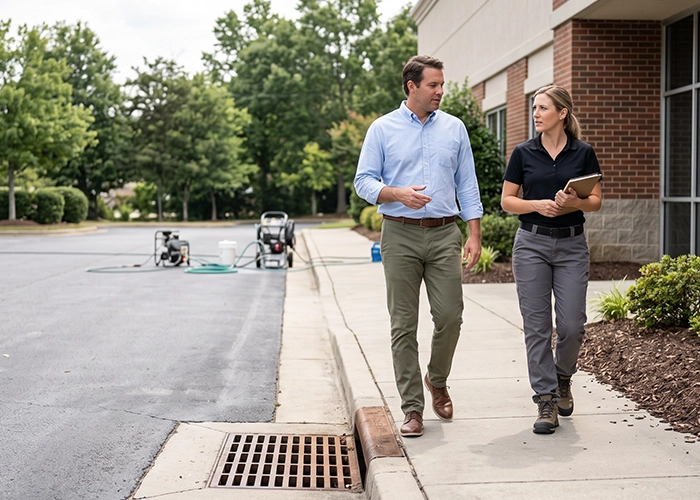 Compliance is shared across the project. A skilled contractor should be able to explain how runoff will be controlled, but the property owner should also know what will happen on-site.
Before approving the work, ask:
- Where will the wastewater flow during cleaning?
- How will nearby storm drains be protected?
- Will the wash water be collected?
- What contaminants are expected on the surface?
- Which cleaning products will be used?
- Where will the collected water be disposed of?
- Has the local authority approved the disposal method?
- Will disposal records be available if requested?
- Does the contractor carry suitable liability insurance?
Be cautious if a contractor says all runoff can go down the drain because only water or biodegradable soap is being used. That answer ignores the dirt and pollutants removed during cleaning.
State and Local Rules Still Apply
Federal law provides a broad framework, but many of the rules that directly affect a pressure washing project come from state agencies, counties, cities, sewer authorities, and local MS4 programs.
One city may allow filtered wash water into the sanitary sewer with written approval. Another may require all wastewater to be collected and transported to an approved facility.
Rules can also change based on the type of property. A residential driveway, restaurant pad, industrial site, and construction area may be handled differently. Property owners should check local requirements instead of using a practice accepted in another city or state.
Simple Ways to Reduce Compliance Risks
Good planning usually costs less than cleaning up an uncontrolled discharge. Property managers can reduce risk by adding wastewater requirements to the project scope and discussing them during the initial site visit.
Keep the following records when they apply:
- Contractor insurance information
- Safety data sheets for cleaning products
- Site photographs taken before and after the work
- Wastewater disposal approvals
- Receipts or manifests from disposal facilities
- Notes on drain protection and recovery methods
- Laboratory results for tested wastewater or debris
Records help show that environmental concerns were considered. They can also make future cleanings easier to plan.
Clean Today. Prevent Problems Tomorrow
EPA pressure washing rules are mainly about keeping polluted wastewater out of waterways and unapproved drainage systems.
With proper site review, runoff control, recovery, and disposal, a property can be cleaned without creating a new environmental concern.
A clean property should not come at the expense of the surrounding area. Contact Washh at 704-321-8000 or reach out online to plan professional pressure washing that keeps your property and its surroundings in mind.
Related Articles:
- Routine Pressure Washing: How It Benefits Your HOA
- 7 Valid Reasons Why You Should Go For Environmentally Friendly Pressure Washing
- 15 Most Important Pressure Washing Tips For Beginners