
Awnings add comfort, shade, and visual appeal to outdoor spaces. However, without proper care, they can quickly lose their strength and appearance. Regular awning cleaning plays an important role in protecting these outdoor installations and helping them last for many years.
Awning Cleaning and Why Regular Maintenance Matters
Outdoor structures face constant exposure to the elements. Sunlight, rain, wind, dust, and airborne debris slowly build up on awning surfaces. Over time, that buildup weakens materials and causes discoloration.
Regular awning cleaning removes dirt and organic growth before it becomes a larger issue. When grime sits on the fabric or metal frame for too long, it can break down protective coatings and lead to structural wear.
Moisture also plays a major role in damage. Dirt traps water against the surface of the awning, creating the perfect environment for mold and mildew. Once these organisms take hold, stains and material deterioration often follow.
For homeowners, business owners, and community associations, routine maintenance helps prevent these problems from developing in the first place.
The Types of Dirt That Damage Awnings Over Time
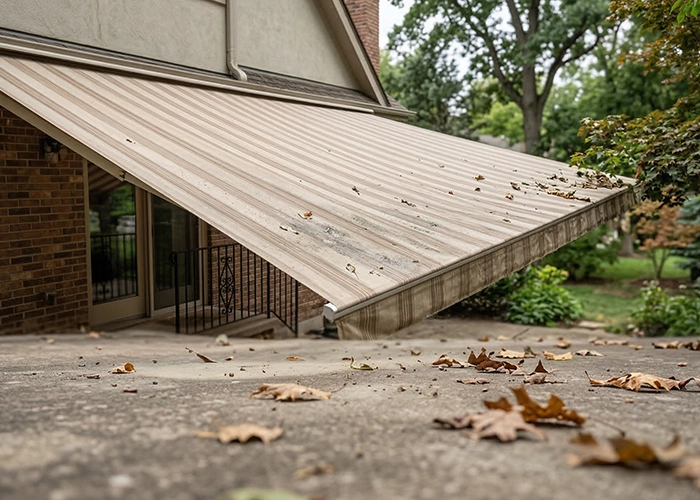 Awnings may look durable, but their surfaces collect many forms of contamination throughout the year. Some of these pollutants can cause serious damage if they are not removed regularly.
Common buildup includes:
- Dust and Airborne Debris
Wind carries dust, pollen, and particles that settle into awning fabric. These materials slowly grind against fibers and weaken them over time. - Mold and Mildew
Moisture combined with shade creates ideal conditions for mold growth. Once it forms, it spreads quickly and can cause staining or odor. - Bird Droppings
Bird waste contains acidic compounds. If left on an awning surface, it can stain or corrode materials. - Tree Sap and Organic Matter
Leaves, sap, and plant debris often collect on awnings near landscaping. These substances can leave sticky residue that traps dirt and moisture.
Each of these contaminants shortens the lifespan of an awning if it is not cleaned away on a regular schedule.
How Dirt and Debris Shorten the Life of Outdoor Installations
Many property owners assume that dirt on an awning is mostly a cosmetic issue. In reality, buildup can cause long term damage that leads to expensive repairs.
When dirt collects on fabric awnings, it blocks airflow and prevents the material from drying properly. This trapped moisture causes fibers to weaken. Eventually, the fabric may begin to sag or tear.
Metal frames are also vulnerable. Dirt holds moisture against metal surfaces, which increases the risk of corrosion. Over time, rust can compromise the structural strength of the frame.
Stains are another concern. Mold, mildew, and bird droppings leave marks that are difficult to remove once they set into the material. Regular cleaning prevents these stains from becoming permanent.
Signs Your Awning Needs Cleaning
 Some awnings show obvious signs when maintenance is overdue. In other cases, buildup happens slowly and goes unnoticed until the damage becomes severe.
Property managers and homeowners should watch for several warning signs.
Common indicators include:
- Visible dirt or dark streaks on the fabric
- Musty odors caused by mold or mildew
- Bird droppings or tree sap residue
- Discoloration or fading of the awning surface
- Water pooling instead of draining properly
Addressing these signs early can prevent more serious damage later. Waiting too long often results in costly repairs or replacement.
The Benefits of Routine Awning Maintenance
Regular maintenance does more than improve the appearance of outdoor installations. It also protects the structure and helps property owners avoid unnecessary expenses.
One major benefit is extended lifespan. Awnings that are cleaned consistently tend to last several years longer than those that are neglected.
Routine cleaning also improves safety. Mold growth and weakened materials can cause sections of fabric to tear or sag unexpectedly. Removing buildup reduces these risks.
Another advantage is curb appeal. Clean awnings create a welcoming environment for residents, guests, and customers. This can be especially important in residential communities, commercial spaces, and shared outdoor areas.
Best Practices for Safe Awning Cleaning
 Cleaning an awning may sound simple, but the wrong method can damage the material. Many awnings use specialized fabrics that require gentle treatment.
Safe cleaning practices typically include:
- Using mild cleaning solutions designed for outdoor fabrics
- Rinsing surfaces with low pressure water
- Soft brushing to remove stubborn dirt
- Allowing the awning to dry completely before retracting it
Harsh chemicals or high pressure washing should usually be avoided. These methods can strip protective coatings or weaken the fabric.
Routine cleaning schedules vary depending on location and environmental exposure. In many cases, cleaning twice a year provides effective protection.
When Professional Cleaning Is the Better Choice
Some awnings are easy to clean with basic tools. Others require specialized equipment and experience. This is especially true for large installations or awnings located in high areas.
Professional cleaning services offer several advantages. They use solutions that remove stains without damaging the material. Technicians also understand how to treat different types of fabrics, metals, and coatings.
Another benefit is efficiency. Professionals can complete the job quickly while ensuring every part of the structure is cleaned properly.
For property managers and community associations, professional maintenance also helps ensure that outdoor installations remain safe for residents and visitors.
Why HOA Communities Should Prioritize Awning Maintenance
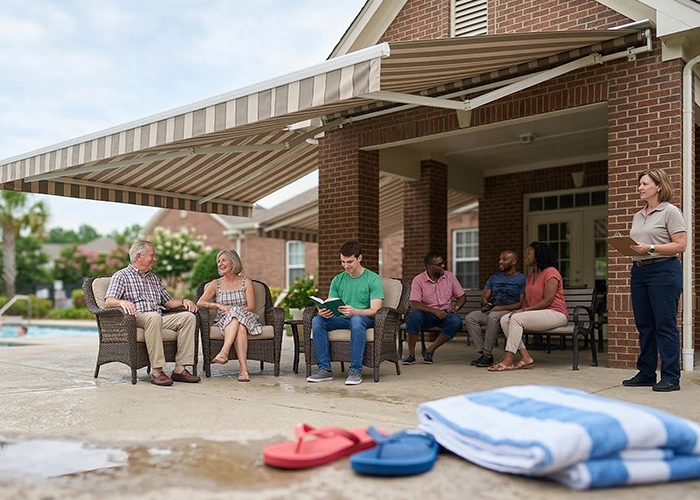 Homeowners associations often manage shared outdoor spaces such as patios, clubhouse entrances, and poolside seating areas. Awnings in these locations receive heavy use throughout the year.
Without regular care, these installations can quickly become stained or damaged. This affects the overall appearance of the community and may reduce property appeal.
Routine awning cleaning helps maintain a clean and inviting environment for residents. It also supports long term maintenance planning by preventing early replacement costs.
Many HOA boards include awning maintenance in their seasonal property care schedules. Doing so protects both the visual appeal and structural condition of shared outdoor spaces.
Protecting Outdoor Installations Through Regular Care
Keeping outdoor installations in great condition takes consistent care. Professional awning cleaning can help remove stubborn buildup while protecting delicate materials.
If your property’s awnings need attention, Call us today at 704.321.8000 or contact us online to schedule routine maintenance with experienced exterior cleaning professionals.
Related Articles