
A little planning matters more in winter because small mistakes get amplified by ice, wind, and shorter daylight. However, cold months do not have to shut down exterior cleaning. The right approach can keep winter pressure washing safety front and center while still delivering a crisp, satisfying finish.
Winter Pressure Washing Safety: Starting With the Right Plan
Winter pressure washing safety begins before the first trigger pull. Conditions change quickly in the colder season, so a quick plan can prevent slips, surface damage, and equipment issues.
The property itself warrants a brief walk-through as well. Shaded walkways, north-facing walls, and low spots that collect water tend to become problem areas first, especially after a rinse.
A realistic pace helps as well. Jobs often take longer in cold weather because water must be managed more carefully, and setup usually requires additional steps.
Reading the Weather Like a Pro
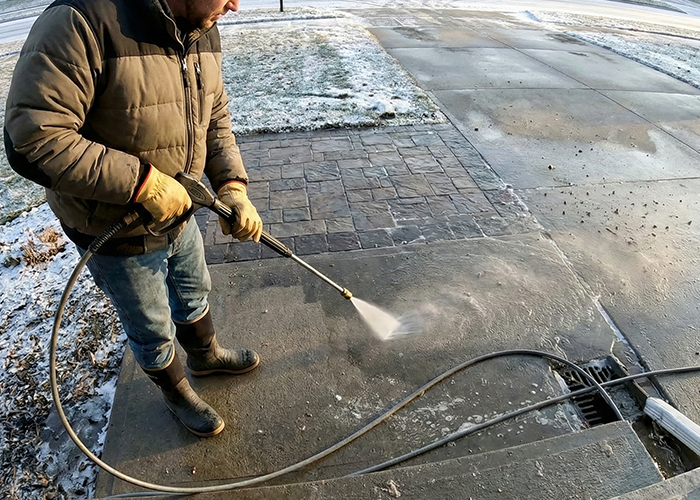 Daylight can be your best helper. Midday hours often offer slightly warmer surface temperatures, which can reduce icing and improve traction, especially on concrete and pavers.
Wind deserves respect in winter. A breezy day can freeze runoff faster than expected, turning “just a little water” into a slick hazard in minutes.
Pressure washing in winter goes best when there’s enough time to finish and dry key areas before evening. Later-in-the-day work can look fine while you’re packing up, then turn risky after sunset.
Keeping Footing Solid on Slick Ground
Slips are the biggest winter risk on many properties. Even when the air temperature feels manageable, wet concrete can become slick, and thin ice can be hard to spot from a standing height.
Runoff control helps more than people expect. A thoughtful rinse pattern can guide water away from steps, ramps, doorways, and the places residents naturally walk.
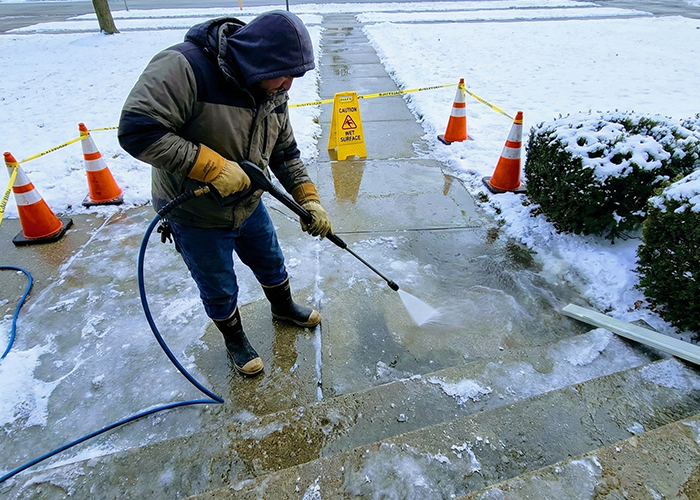
Work zones also need clear boundaries. Cones, a simple “wet surface” sign, or a visible barrier can prevent someone from wandering into a freshly rinsed area.
Small Changes That Reduce Slip Risk
- A broom or squeegee can push water away from walk paths before it pools.
- Sand can improve traction quickly on problem spots without making a mess of landscaping.
- Ice melt can be used when appropriate for the surface and the property’s rules.
- A dedicated “dry path” can be kept clear for homeowners and team members.
Winter Pressure Washing Safety: What Clothes to Wear?
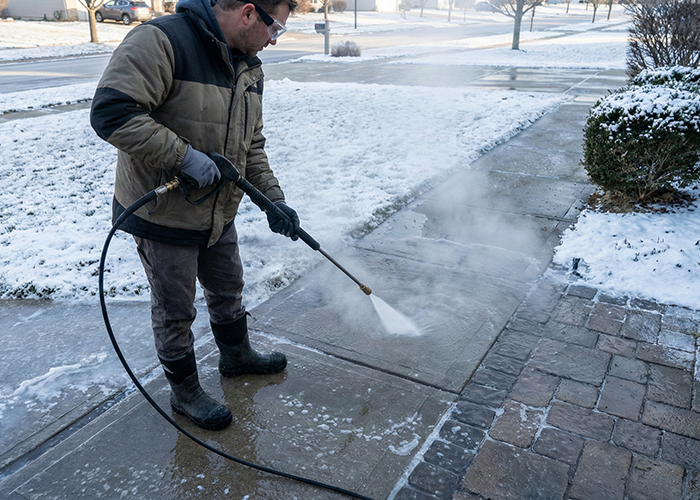 Warm clothing is helpful, but control matters more. Bulky layers can limit movement, and thick gloves can reduce feel at the trigger, so a balance tends to work better than piling on extra gear.
Footwear should be chosen like it’s part of the equipment. Slip-resistant boots with solid tread can make a real difference on wet pavement, especially near slopes and curbs.
Eye protection is a must year-round, yet winter adds another twist. Salt, grit, and small stones often sit on surfaces during the season, and spray can launch debris without warning.
Setting Up Equipment for the Cold
Cold weather changes how hoses behave. Stiffer lines can tug back, catch on corners, and create sudden movement at the wand, so extra slack and a tidy hose path can help.
Connections also deserve a second look. A small leak that feels minor in warm weather can turn into a freezing issue as temperatures drop, especially if water sits in fittings.
Pressure washing in cold weather is easier when the system stays moving during active work. Long pauses with water sitting in the pump or line can increase freeze risk, particularly on marginal days.
Cold-Weather Setup Habits That Pay Off
- A short “test spray” in a safe area can confirm the nozzle and pattern before starting.
- Hose routing away from steps and entryways can reduce trip hazards.
- A stable staging spot for tools can keep items from landing in wet areas.
- A quick check of seals and fittings can prevent leaks that become ice.
Winter Pressure Washing Safety: Using the Proper Techniques
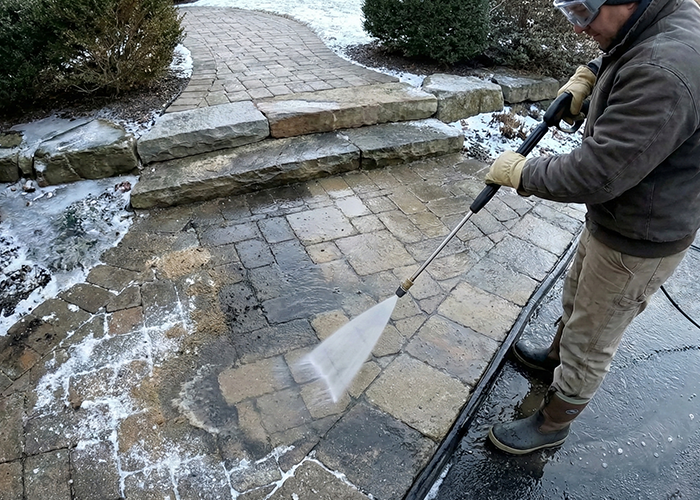 Winter grime often looks different. Salt residue, sand, and dark streaks can sit on stone and pavers, and that buildup can tempt people to crank up the pressure.
A gentler approach usually protects the surface and improves safety. Wider spray patterns, a little more distance, and controlled passes can clean effectively without forcing water into joints or cracks.
Pavers and natural stone need special care in winter. Joint sand can be disturbed by aggressive spraying, and small gaps can hold water that later freezes, which is the kind of damage a homeowner notices in spring.
A test spot is worth the extra minute. Hidden areas along a side path or behind landscaping can show how the surface reacts before the main cleaning begins.
Winter Pressure Washing Safety: What Cleaning Products to Use
Cold temperatures can change how detergents perform. Dwell time can stretch longer, and rinsing may take more patience, especially when the surface stays chilly.
Over-application can backfire in winter. Too much product can leave slippery residue, and that residue becomes a safety concern on walkways and stairs.
A careful rinse pattern helps keep the job predictable. Section-by-section work can limit pooling, and it can make it easier to keep traction under control.
Product choice should also respect the property. Landscaping, nearby storm drains, and HOA rules often shape what can be used and how runoff should be handled.
Electrical and Fuel Safety on Winter Jobs
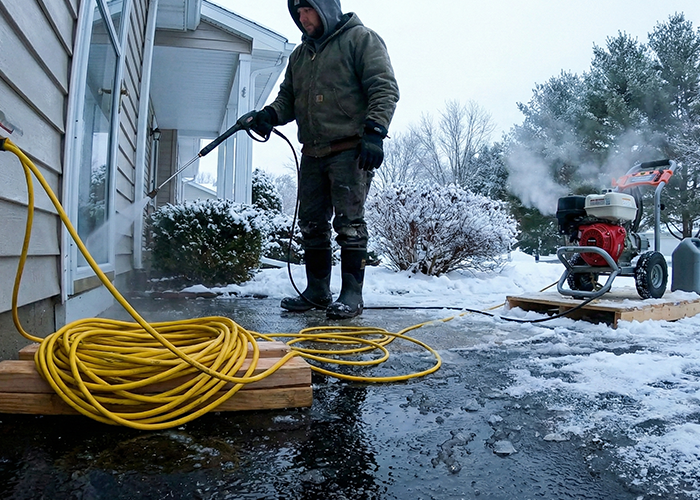 Electricity and water already demand caution, and winter adds more moisture in the work area. Extension cords should stay out of wet zones, and connections should be kept elevated whenever possible.
GFCI protection is a smart layer of safety for exterior work. Even then, placement matters, since a puddle near a plug can turn into a bigger issue faster than expected.
Gas-powered machines need ventilation, even when the cold makes indoor work feel tempting. Carbon monoxide risk does not drop just because it’s chilly outside.
Injury Awareness That’s Easy to Overlook
High-pressure spray can cause serious injuries, even when the wound looks small at first. Quick medical attention matters with any injection-style injury, since the damage under the skin can be more severe than the surface suggests.
Flying debris is another winter risk that catches people off guard. Grit and tiny stones can lift easily off hardscapes during the season, and those impacts can cause eye injuries or cuts.
A simple rule can keep everyone safer: if something feels off, stop and reset. Rushing in winter tends to create the exact problems you were trying to avoid.
Winter Pressure Washing Safety: Completing the Job
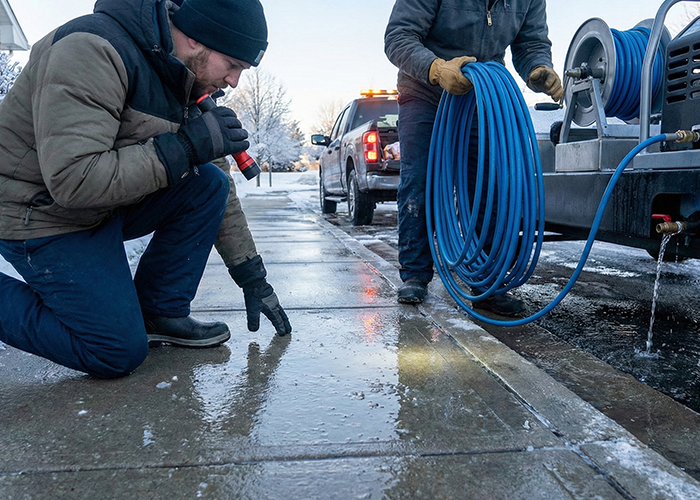 The last part of the job should include the property, not just the machine. A final walk-through can catch pooling water near stairs, slick patches on sidewalks, and wet areas that could freeze later.
Equipment care matters more in winter, too. Water left in pumps, hoses, or fittings can freeze during storage, and freeze damage can lead to cracked components and surprise leaks on the next job.
Manufacturer guidance on winter storage is worth following closely. Pump protection products and proper draining steps can help prevent corrosion and freezing issues when equipment sits between uses.
A Practical End-of-Job Routine
- A quick squeegee pass can push water away from key walk paths.
- A check of shaded areas can catch spots that stay wet longer.
- A careful drain and storage process can reduce freeze damage.
- A final look at entryways can prevent later slip complaints.
Warm Results, Safe Work
Winter pressure washing safety comes down to steady habits and careful choices. Better timing, controlled runoff, and the right gear can keep the work comfortable and the property safe. A winter clean can still look sharp, as long as safety gets treated like part of the finish.
Need help to prepare for winter? Washh offers residential and commercial pressure washing services. Call us today at 704.321.8000 or contact us online to get a free estimate!
Related Articles: