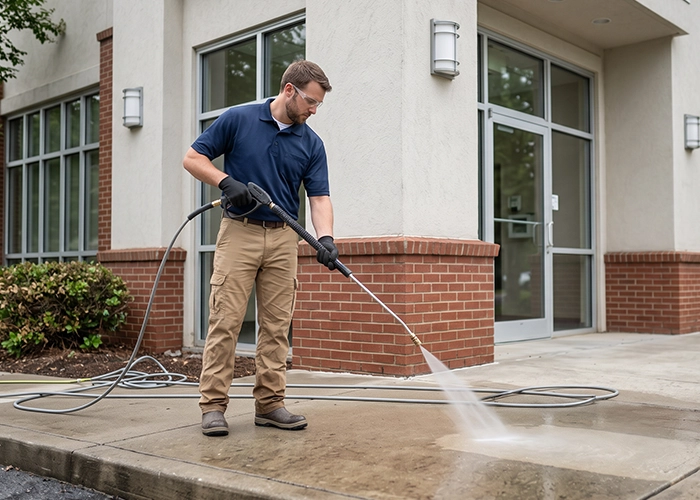
Pressure washing may look simple, but using the wrong method can damage siding, strip paint, scar concrete, or force water into a building. Hiring insured and certified cleaners gives property owners greater confidence that the work will be handled with care.
What Does It Mean When a Cleaner Is Insured?
An insured pressure washing company carries one or more business insurance policies. The exact coverage can vary, so customers should not assume that every insured company has the same protection.
General liability insurance is one of the most common policies carried by cleaning contractors. It may respond to certain third-party claims involving bodily injury or property damage, subject to the terms, limits, and exclusions of the policy.
For example, coverage may apply if a cleaner accidentally damages an exterior fixture or if someone is injured because of the company’s work. The facts of the incident and the policy language will determine whether a claim is covered.
Common Types of Business Insurance
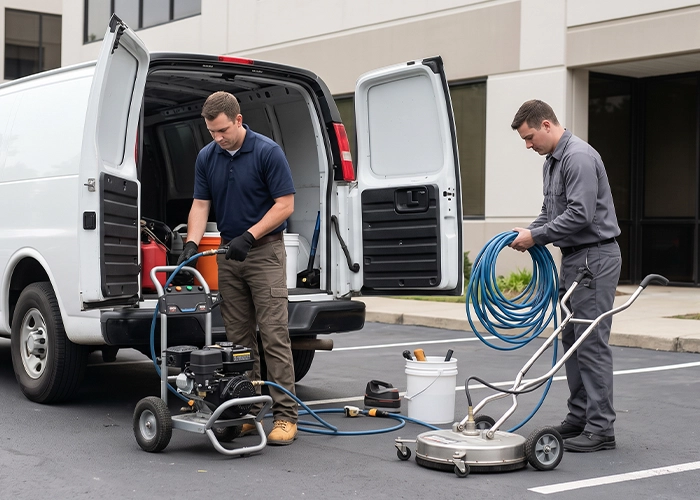 Pressure washing companies may carry several forms of coverage based on their services, equipment, workforce, and location. Common policies include:
- General liability insurance: May cover qualifying third-party injuries and property damage.
- Workers’ compensation insurance: Helps cover job-related injuries or illnesses involving employees. Requirements differ by state.
- Commercial auto insurance: Covers business vehicles according to the terms of the policy.
- Tools and equipment coverage: May help protect mobile equipment from covered theft, loss, or damage.
- Commercial umbrella insurance: Can provide added liability limits above certain underlying policies.
A company does not need every available form of insurance to handle each project. Still, its coverage should make sense for the size and risk of the job being performed.
Why Insurance Matters to Property Owners
Even careful crews can face unexpected problems. A loose fixture may break, water can enter through an unnoticed gap, or a hose may create a trip hazard near a walkway.
When a contractor has suitable insurance, there is an established process for reporting a qualifying loss. Without it, the property owner and contractor may be left to settle repair costs on their own.
Insurance also suggests that a company is taking its business duties seriously. It is not proof that every job will be perfect, but it is one useful sign of a more responsible operation.
Property managers and commercial owners may face added concerns. They often need vendors to meet insurance limits, provide certificates of insurance, or name another party as an additional insured when appropriate.
What Certification Means in Pressure Washing
 Certification usually means that a cleaner has completed education, passed an assessment, or met standards set by a training provider or trade organization. The topics may include equipment use, cleaning methods, chemical handling, surface care, job safety, or water recovery.
Customers should understand one key detail: certification is not the same as a universal federal license. There is no single national pressure washing certificate that qualifies every cleaner for every type of job.
Programs also vary in depth. Some require hands-on instruction and testing, while others are shorter courses. A careful customer should ask who issued the certification, what it covered, and whether it remains current.
Training Can Reduce Costly Mistakes
A trained cleaner is more likely to know that higher pressure is not always better. In many cases, the correct solution, dwell time, water flow, and rinsing method matter more than raw force.
Training may help a cleaner make better decisions about:
- The right pressure level for each surface
- When to use soft washing instead of high pressure
- How to test a small area before full cleaning
- Which cleaning products are suitable for the stain
- How to protect plants, doors, windows, and electrical fixtures
- How to control wash water and prevent unwanted runoff
These choices affect both safety and results. A technician who understands the surface is less likely to leave wand marks, discoloration, etched concrete, or damaged paint behind.
Insurance and Certification Serve Different Purposes
The terms “insured” and “certified” are often placed together, but they do not mean the same thing. One relates mainly to financial protection, while the other relates to training or measured knowledge.
Insurance does not prove that a contractor knows how to clean delicate surfaces. Certification does not guarantee that money is available if covered property damage occurs.
For stronger protection, look for both. A well-run company should also have experience, clear service terms, sound equipment, and a process that fits the property.
| Qualification | What It Shows | What It Does Not Guarantee |
| Insurance | The company carries stated coverage | That every incident will be covered |
| Certification | Training was completed through a named program | Perfect results on every surface |
| Experience | The cleaner has handled real projects | Formal training or active insurance |
| License or permit | Certain local or state rules were met | Skill in every cleaning method |
This distinction helps property owners ask better questions. It also makes it easier to compare quotes based on real qualifications instead of price alone.
Safer Handling of Cleaning Products
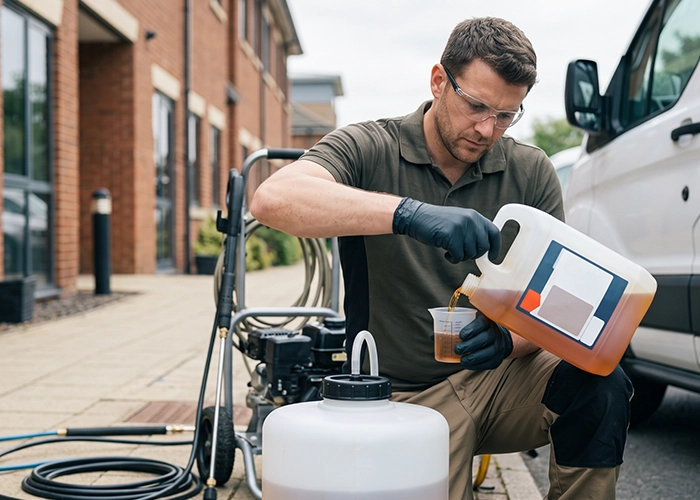 Water alone does not remove every type of buildup. Oil, algae, mildew, rust, and other stains may require different products and treatment methods.
Professional cleaners should understand product labels, dilution rates, dwell times, and safe application. They must also know which chemicals should never be mixed.
The surrounding property matters as well. Plants may need to be watered, covered, or rinsed. Nearby people and pets should be kept away from the active work zone until the area is safe.
Proper training does not remove all risk, but it helps crews plan for it. That planning is especially important on large commercial sites where visitors, employees, vehicles, and multiple entrances may be present.
Responsible Wash Water Management
Pressure washing can loosen dirt, oil, paint residue, cleaning products, and other pollutants. If that wash water flows into a storm drain, it may enter local waterways without receiving the same treatment as sanitary wastewater.
Rules can differ by state and municipality. The correct plan may depend on what is being cleaned, which products are used, and where the runoff will travel.
A responsible contractor should evaluate drainage before work begins. Depending on the project and local rules, crews may need to:
- Block or protect nearby storm drains
- Collect wash water with berms or vacuum equipment
- Filter debris from recovered water
- Dispose of wastewater through an approved method
- Avoid cleaning when runoff cannot be controlled
Certification does not replace local knowledge. Cleaners must still follow the laws and permit rules that apply where the work takes place.
Questions to Ask Before Hiring a Cleaner
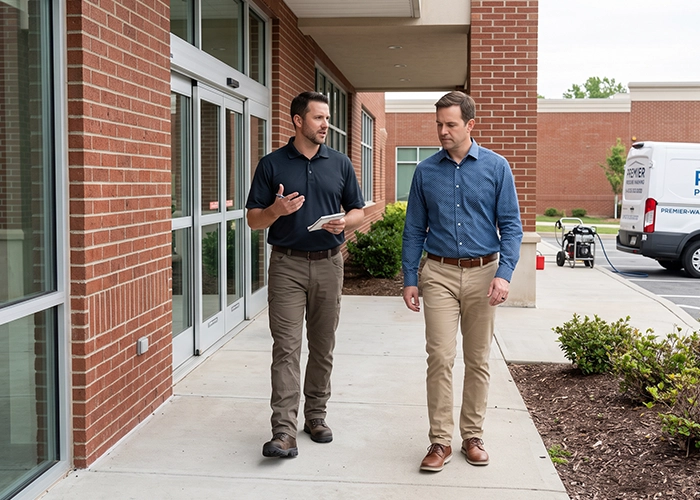
A few direct questions can reveal a great deal about a pressure washing company. A reputable contractor should be willing to explain its coverage, training, methods, and project plan.
Ask the following before accepting a quote:
- Can you provide a current certificate of insurance?
Check the company name, insurer, policy dates, and stated coverage. If required for a commercial project, ask your insurance adviser or contract manager what documentation is needed. - Who provided your certification or training?
Ask what subjects were covered and whether the training included practical work. - Have you cleaned this type of surface before?
Experience with concrete does not always translate to roofs, wood, stucco, or historic masonry. - What method will you use?
The contractor should be able to explain why pressure washing, power washing, or soft washing fits the surface. - How will you protect nearby property?
Listen for clear steps involving plants, windows, doors, outlets, vehicles, and pedestrian areas. - How will you manage runoff?
The answer should reflect the site conditions and applicable local rules. - What happens if damage occurs?
A professional company should have a clear reporting and response process.
How to Verify Insurance
A contractor may say that the business is fully insured, but it is wise to request proof. Ask for a certificate of insurance issued for the current policy period.
Review these details:
- The legal name of the insured business
- The policy’s effective and expiration dates
- The types of coverage shown
- The listed coverage limits
- The name and contact details of the insurance producer
A certificate offers useful evidence, but it is not the policy itself and does not change coverage. If the job carries added risk, you may wish to confirm coverage with the insurance producer or ask a qualified adviser to review the contract.
Warning Signs That Deserve Attention
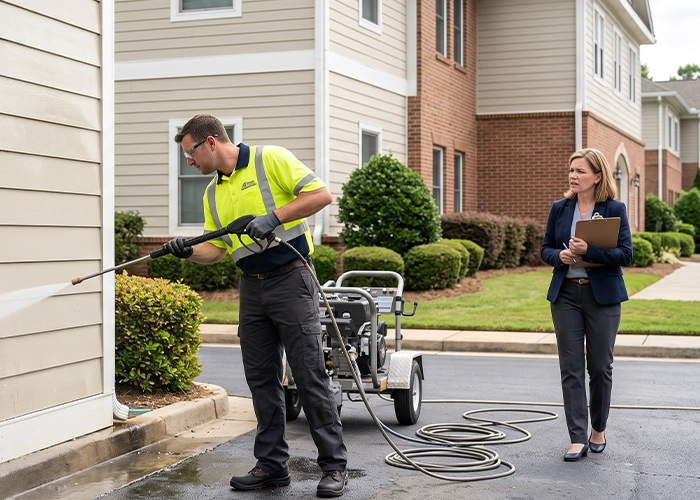 Price matters, but an unusually low estimate may leave out important safeguards. Be careful when a contractor refuses to discuss insurance, avoids written estimates, or gives vague answers about the cleaning process.
Other warning signs include:
- Using maximum pressure on every surface
- Starting work without inspecting the property
- Offering no plan for plants or nearby fixtures
- Ignoring storm drains and wastewater flow
- Claiming that certification guarantees damage-free work
- Asking for full payment before any work begins
One warning sign may have a reasonable explanation. Several of them together suggest that it may be safer to choose another provider.
Clean Spaces. Safer Choices. Greater Peace of Mind.
The visible result is only one part of a pressure washing service. The way the property is assessed, prepared, cleaned, and left afterward matters just as much.
One poorly planned cleaning job can disrupt daily activity and lead to repairs that cost far more than the original service.
A clean property makes a strong first impression. A professionally cleaned property makes it last.
When you’re ready to restore your surfaces, protect your investment, and make your property look its best, turn to WASHH. Contact us today for a tailored estimate from a trained and insured team.
Related Articles: